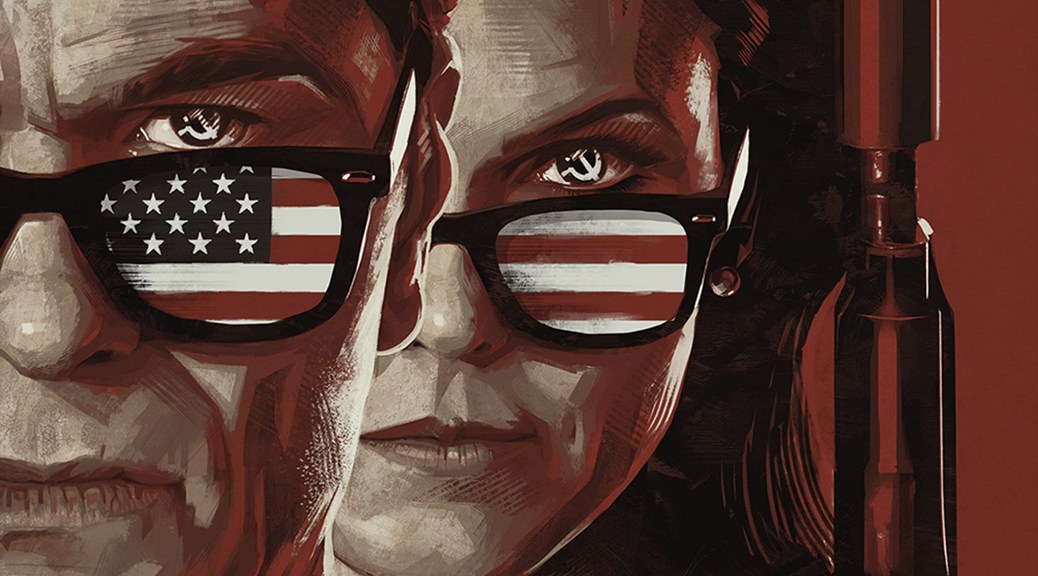
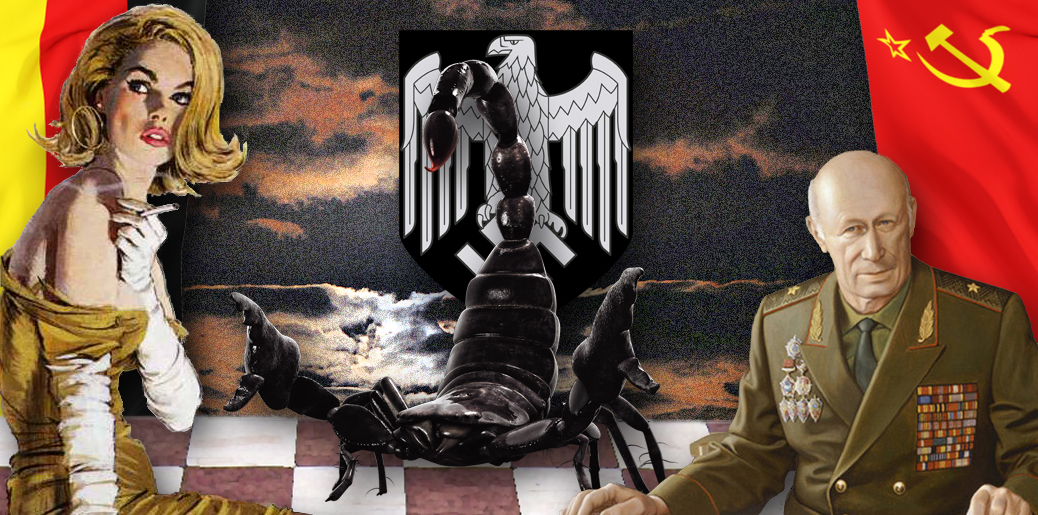
On radio program Esoteric Hollywood, Jay Dyer and I discuss spy films and how they relate to real-world espionage in the ongoing Great Game. From depictions of KGB Directorate S in the current hit show The Americans to the shadowy backers of 1989’s silly propaganda bomb Red Scorpion, we delve into the lesser-known aspects of spy culture that reflect the realities of intelligence history.
Tag Archives: Counterintelligence
Oswald & the KGB in Mexico
Before the murder of John F. Kennedy on November 22nd, 1963, Lee Harvey Oswald – or even possibly a double – visited the Soviet embassy in Mexico City. Retired KGB Lt. Gen. Nikolai Leonov, then on assignment in Mexico’s capital as an intelligence officer, met Oswald that day, and he has little doubt the young American was just a pawn in a much wider plot.
An intelligence officer’s workdays were full of work with active agent networks, with those who had been brought into partnership with Soviet intelligence by previous shifts of our colleagues, and with agents arriving from other countries, etc.
Treachery at Lubyanka
Former KGB General Filipp Bobkov was a veteran counterintelligence officer and chosen by Yuri Andropov to head the Fifth Chief Directorate (Ideological Counter-Subversion), which he led from 1969 to 1983. Bobkov recounts the twilight war of counterespionage waged between the CIA and KGB – a contest with deadly consequences.
In the Cold War, as in any other war, there were successes and defeats – failures and miscalculations that at times led to inescapable consequences. Any intelligence service will suffer the blows of the enemy with difficulty, and the KGB also had to undergo not a few such blows. Betrayals by apparatus officers – those with whom you spend all day, whom you see in the elevator and at meetings, with whom you’re connected by constant engagement in shared matters – these were taken especially painfully.
Ivan Ilyin vs. the NKVD
The great Russian White emigre philosopher Ivan Aleksandrovich Ilyin (1883-1954) was not just an erudite thinker, but also a practitioner of espionage and underground political work. Before he was exiled in 1922, Ilyin was active in the anti-Bolshevik resistance. This article, written at some point during the 1930s or 1940s, addresses Soviet NKVD provocations and subversion in the Russian White emigration abroad.
The word “tradecraft” signifies a conspiracy. The art of tradecraft is in the ability to run “conspiracies” secretly and bring them to a successful completion. This art has its own inviolable rules: whoever doesn’t observe them dooms his undertaking, and possibly himself and all like-minded men far and near. Here amateurism is tantamount to failure and death.
Operation Scorpion
From the memoirs of legendary Soviet intelligence officer Maj. Gen. Yuri Ivanovich Drozdov comes the incredible story of a false-flag recruitment operation by the KGB’s Directorate S (Illegals) against West Germany’s own intelligence service, the Bundesnachrichtendienst (BND) during the height of the Cold War. The following 1995 article from German Focus magazine tells the tale:
Former KGB General Yuri Drozdov admits: “Our valued agent in the German Federal Intelligence Service (BND) has still not been uncovered.”
Firm handshakes, pats on the shoulder – the old guard in its narrow circle.
The men, in a predominant majority over 70 years old, are dressed strictly according to protocol. On this hot summer day they’re wearing austere coats and shirts with ties. Guests are received by Yuri Drozdov, general of the KGB, the former Soviet secret service, who just a short time later, over a glass of vodka, would allow himself to loosen his tie.
Hitler’s Plot to Assassinate Stalin
While it is known that German intelligence targeted Soviet leader Josef Stalin during World War II, how close did they come to succeeding? The following tells the story of SS Operation Zeppelin and the brilliant counter-moves, known as Operation Fog, undertaken by Soviet military counterintelligence (SMERSH) officer Grigorii Grigorenko, who would go on to head the KGB Second Chief Directorate during the Cold War.
Much has been said and written about the attempt to liquidate Stalin during the Second World War—at the same time, nothing specific, but rather things at the level of speculation or fiction.
The failed assassination of the Supreme Commander of the Soviet Union, planned by German saboteurs, is a thrilling subject, after all. And they indeed planned to kill him. However, the story of capturing terrorist saboteurs turned into the prequel to one of the most successful operations by Soviet counter-intelligence, codenamed Fog and carried out by Major Grigorii Fedorovich Grigorenko, a resident of Poltava, today’s Ukraine. Russia’s Federal Security Service (FSB) recently declassified this operation.
The Downfall of Agent Sphere
Lt. Col. Vladimir Nikolaevich Zaitsev, an officer of the KGB’s elite spetsnaz Group A (Alpha), commanded the operation to arrest CIA agent Adolph Tolkachev in 1985. Zaitsev recounts the affair and its strategic significance in the Cold War.
Group A’s very first snatch operation against a “werewolf” was the summer 1985 arrest of Adolph Tolkachev (agent code name [CK] SPHERE), an engineer at a USSR Ministry of Radio Industry scientific research institute – one of the leading specialists in aero-navigational systems. Continue reading The Downfall of Agent Sphere
The Death of Trigon
Aleksandr Ogorodnik, known as “Trigon” by his CIA handlers, was a Soviet diplomat who was lured into spying for Washington through sexual compromise – a honey trap. Historian Aleksandr Sever provides the inside story of how the KGB Second Chief Directorate (Counterintelligence) tracked and captured Ogorodnik, as well as speculation on his mysterious demise.
Among the CIA agents unmasked by the KGB, Aleksandr Ogorodnik occupies a special place. It was this man who became the main antagonist in a ten-part Soviet television series. The story of Aleksandr Ogorodnik, as shown on TV screens, was close to what happened in real life. The plot of the TV movie TASS is Authorized to Announce was written on the basis of investigation materials, and Chekists [KGB officers], active participants in the operation to expose the American spy, functioned as consultants. It’s understandable that in the picture the action occurred in a made-up foreign state and the traitor was a nondescript individual, while the basic attention of the viewers was focused on the main positive and negative personages – KGB and CIA officers. Behind the scenes, there remained a multitude of important details of this “noisy” affair.
Russian Intelligence vs. Napoleon
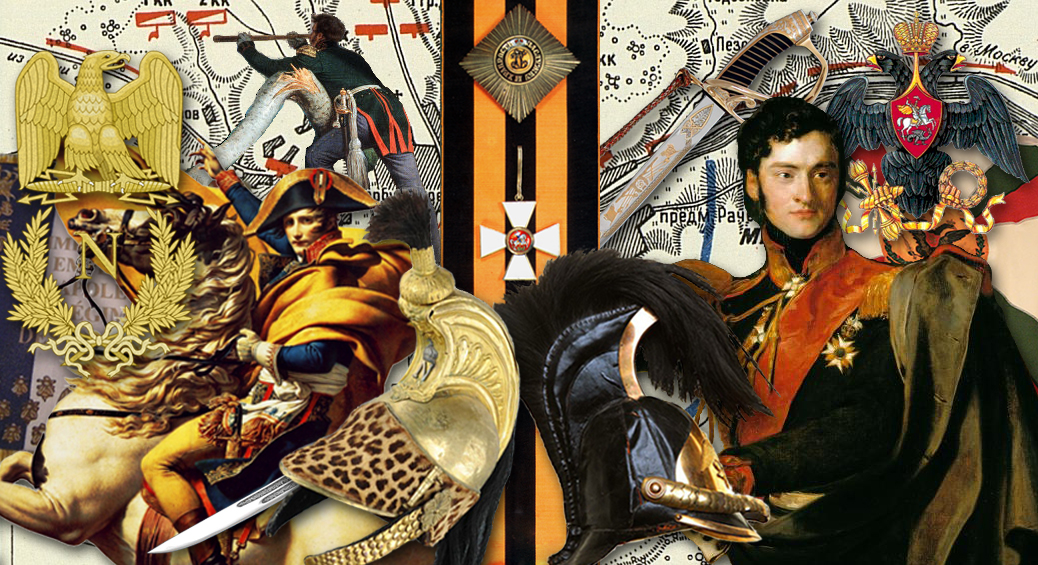
Napoleon Bonaparte’s fateful invasion of Russia, known as the Fatherland War, was not only a titanic military clash, but also an espionage duel between Russian and French intelligence. The archives of the Russia’s Foreign Intelligence Service (SVR) reveal a classic true spy story set in Napoleon’s Paris, one filled with intrigue, adventure, and stolen secrets.
Alexander I of Russia and Napoleon I of France were the two main protagonists and antipodes of a military-political drama that played out on the battlefields of Europe at the very beginning of the 19th century. Both the Russians and French were watching each other vigilantly, understanding well that confrontation and military conflict were inevitable. In these conditions the acquisition of timely, reliable, and secret information on the designs and actions of the potential adversary took on a significance of the first degree.
Soviet Intelligence on the Eve of WWII
Pavel Anatolyevich Sudoplatov, chief of NKVD special operations in World War II, gives a strategic overview of Soviet intelligence in the years leading up to the second military cataclysm that would devastate Europe in the twentieth century.
The role of the organs of state security in Soviet history can only be evaluated after the Soviet Union ceased to exist. After Lenin’s death the country’s primary special service was reformed into the Unified State Political Directorate (OGPU). However, as before, it remained the apparatus for enacting political repression both inside the country and abroad. Alongside this, it is very important to understand the repression was viewed by the Party and Soviet leadership as a necessary, forced action, the goal of which was the suppression of political opposition and the strengthening of the Soviet state.