In August 2008 the Japanese security service revealed details of a remarkable spy saga with all the makings of a Le Carre novel, if a bit further east. A deep-cover Russian intelligence officer of unspecified “Asian origin” masqueraded as a Japanese man and ran an espionage network in Tokyo over the span of three decades. Japan’s government kept the case under wraps for a number of years, so why did it choose to shed light on this extraordinary intelligence operation only recently?

The Downfall of Agent Sphere
Lt. Col. Vladimir Nikolaevich Zaitsev, an officer of the KGB’s elite spetsnaz Group A (Alpha), commanded the operation to arrest CIA agent Adolph Tolkachev in 1985. Zaitsev recounts the affair and its strategic significance in the Cold War.
Group A’s very first snatch operation against a “werewolf” was the summer 1985 arrest of Adolph Tolkachev (agent code name [CK] SPHERE), an engineer at a USSR Ministry of Radio Industry scientific research institute – one of the leading specialists in aero-navigational systems. Continue reading The Downfall of Agent Sphere

Deception & “Active Measures”
KGB Lt. General Vitaly Gregorievich Pavlov (1914-2005), a senior officer of the First Chief Directorate (Foreign Intelligence), responds to charges made by Soviet defectors to the West regarding disinformation campaigns in the Cold War. Pavlov notes that disinformation is a normal tool for ensuring the secrecy of ongoing intelligence operations by any espionage service, and that Anatoly Golitsyn’s claims of a “grand deception” were proven as fantasy by the historical record.
Now I’d like to speak a bit on the so-called active measures of Soviet foreign intelligence – those very active measures over which Anatoly Golitsyn, Stanislav Levchenko, Vladislav Bittman, and still others among the traitors, launched into their hysterics after having left for the West. In their portrayal, such measures represent calculated, wide-scale activity to deceive a world audience and lead it into confusion regarding the true goals and motives of Soviet foreign policy.

Soviet Intelligence in World War II
From the archives of the SVR comes a broad overview of the Second World War by the chief of Soviet intelligence in World War II, Lt. Gen. Pavel Fitin:
“Pavel Matveevich Fitin headed the Fifth Department of the NKVD GUGB [Chief Directorate for State Security] – the NKGB First Directorate from May of 1939 to 1946. The basis of this material is formed by his memoirs, which were written by the author in 1970 for the 50th anniversary of Soviet foreign intelligence.”
Not claiming to fully shed light on everything, for this would demand special research, I would like to recount certain matters of the multifaceted activity of the intelligence service of the Soviet state security organs during the years of the Great Patriotic War.

The Death of Trigon
Aleksandr Ogorodnik, known as “Trigon” by his CIA handlers, was a Soviet diplomat who was lured into spying for Washington through sexual compromise – a honey trap. Historian Aleksandr Sever provides the inside story of how the KGB Second Chief Directorate (Counterintelligence) tracked and captured Ogorodnik, as well as speculation on his mysterious demise.
Among the CIA agents unmasked by the KGB, Aleksandr Ogorodnik occupies a special place. It was this man who became the main antagonist in a ten-part Soviet television series. The story of Aleksandr Ogorodnik, as shown on TV screens, was close to what happened in real life. The plot of the TV movie TASS is Authorized to Announce was written on the basis of investigation materials, and Chekists [KGB officers], active participants in the operation to expose the American spy, functioned as consultants. It’s understandable that in the picture the action occurred in a made-up foreign state and the traitor was a nondescript individual, while the basic attention of the viewers was focused on the main positive and negative personages – KGB and CIA officers. Behind the scenes, there remained a multitude of important details of this “noisy” affair.
Russian Intelligence vs. Napoleon
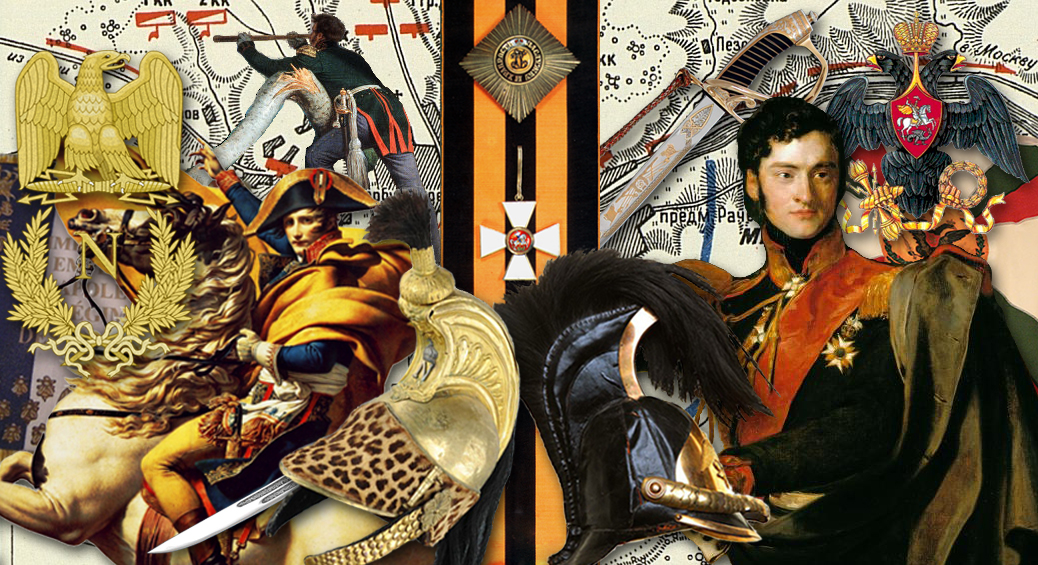
Napoleon Bonaparte’s fateful invasion of Russia, known as the Fatherland War, was not only a titanic military clash, but also an espionage duel between Russian and French intelligence. The archives of the Russia’s Foreign Intelligence Service (SVR) reveal a classic true spy story set in Napoleon’s Paris, one filled with intrigue, adventure, and stolen secrets.
Alexander I of Russia and Napoleon I of France were the two main protagonists and antipodes of a military-political drama that played out on the battlefields of Europe at the very beginning of the 19th century. Both the Russians and French were watching each other vigilantly, understanding well that confrontation and military conflict were inevitable. In these conditions the acquisition of timely, reliable, and secret information on the designs and actions of the potential adversary took on a significance of the first degree.
The Prisoner: A Deep-State Analysis
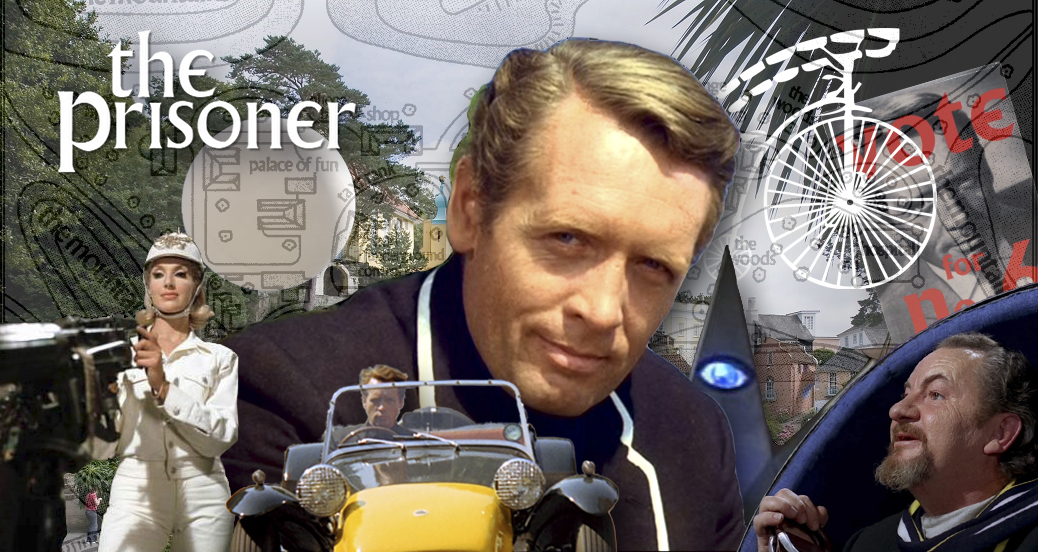
1960s espionage fiction was definitive for spy culture. Developing its own unique aesthetic, from Bond to The Saint to Harry Palmer, the vivid, flamboyant style of both the spies and their cinema incarnations created an iconic pop-phenomenon that survives to this day (as 007 is still going strong). Everyone knows 007, but few are aware of the more philosophical, science-fiction based British cult show, The Prisoner, starring Patrick McGoohan.

Special Mission to Peru
Before he was the KGB’s top analyst, Lt. Gen. Nikolai Sergeevich Leonov was a field officer of the First Chief Directorate specializing in Latin America. With experience in Mexico and ties to Fidel Castro and Che Guevara, Leonov was a key player in the USSR’s strategy of prying Latin America from Washington’s grip. In 1968 a left-leaning military junta came to power in Peru – shortly thereafter, Leonov was sent to Lima on a fact-finding mission under journalistic cover.
I returned to Moscow at the very end of 1968, and I had just turned 40. My time in the service seemed to be going without any problems. Soon I was appointed the deputy chief of the Latin American Department. Such a promotion was unprecedented – I had immediately jumped through two positions. But at that time, I apparently ascribed to the maxim later formulated by future First Chief Directorate head Leonid Shebarshin: “Don’t ask for anything, and don’t refuse anything.” I still wholeheartedly believed that “the leadership saw things the clearest,” and consequently, it would know what to do.

The KGB in India: A Recruitment Account
KGB officer Vadim Nikolaevich Sopryakov – “Comrade Maxim” – tells of a key recruitment he made in 1968 while serving under diplomatic cover in Delhi, India. Sopryakov, a retired captain first rank, began his service in the KGB Border Guards naval units, then transferring to the First Chief Directorate (Foreign Intelligence), and even serving in the elite Directorate S (Illegals) and spetsnaz. In his account of his time in India, Sopryakov sheds light on the practical psychology applied by an intelligence officer for recruiting potential agents, in this case “Mr. B.,” whom the KGB would code-name “Herman.”
On the next-to-last day of a 1967 coming to its end, the Soviet intelligence resident in Delhi received an assignment from the Center:
Pinpoint individual “B.” Collect characteristics on him. Determine the expediency and practical possibility of his development for recruitment. Report on results.

The GRU’s “Viking” Spy in NATO
Journalist and retired Soviet military intelligence (GRU) Colonel Nikolai Poroskov provides the inside story of Swedish Air Force Colonel Stig Wennerström, who ferreted out NATO secrets for the GRU for nearly 15 years from 1948 to 1962. Poroskov relies on the first-hand testimony of Wennerström’s case officer and friend, GRU General Vitaly Nikolsky.
On June 13th, 1952, a Soviet Mig-15 interceptor shot down a Swedish Douglas DC-3 on a reconnaissance mission over the neutral waters of the Baltic Sea. There were eight crew members on board. At that time the Swedes announced that the plane was carrying out a training flight.
A half-century later, in 2003, 55 kilometers east of Gotland the Swedes uncovered the body of the airplane and raised it from a depth of 126 meters. The tail end of the vehicle was torn to pieces by machine gun fire. The bodies of four men were found; the fate of the other four has remained unknown.
 Espionage History Archive