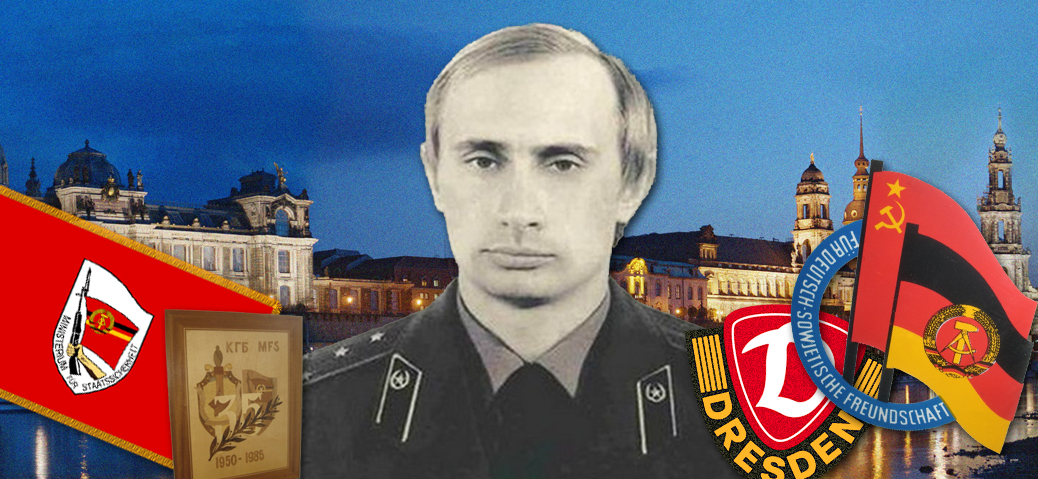
Putin in East Germany

Retired KGB Colonel Vladimir Usoltsev shares his psychological portrait of “Volodya” – his one-time subordinate and current Russian President Vladimir Putin, from their time serving together in a KGB intelligence group in Dresden, East Germany, during the 1980s. 


The supply of episodes I remember, ones which I could expound without the risk of fabrication, is gradually being exhausted. I could still recount much, resting on foggy glimpses, but I’d fear to be accused of lying. And the goal itself of my story is not only to tell of our life in Dresden and fill in the gap in the biography of an extraordinary Russian politician, but also to clear up any fantasies and lies. Continue reading Putin in East Germany

The Demise of Enver Pasha

Turkish warlord Enver Pasha (1881-1922) was not only the architect of the Armenian genocide, but also a key player in the early twentieth-century Great Game. A consummate intriguer, Enver attempted forging a Pan-Turkic empire in Central Asia, where he would meet his death at the hands of the Red Army.


The assassination of Enver Pasha cannot be called a special operation in the full sense of the word. It was sooner a special military operation carried out by the forces of the army and special services. But we can form a conception of how Soviet power was established in Central Asia, and by what methods, on its example.

Continue reading The Demise of Enver Pasha

Ivan Ilyin vs. the NKVD

The great Russian White emigre philosopher Ivan Aleksandrovich Ilyin (1883-1954) was not just an erudite thinker, but also a practitioner of espionage and underground political work. Before he was exiled in 1922, Ilyin was active in the anti-Bolshevik resistance. This article, written at some point during the 1930s or 1940s, addresses Soviet NKVD provocations and subversion in the Russian White emigration abroad.


The word “tradecraft” signifies a conspiracy. The art of tradecraft is in the ability to run “conspiracies” secretly and bring them to a successful completion. This art has its own inviolable rules: whoever doesn’t observe them dooms his undertaking, and possibly himself and all like-minded men far and near. Here amateurism is tantamount to failure and death.

Continue reading Ivan Ilyin vs. the NKVD

Moonraker & Breakaway Civilization

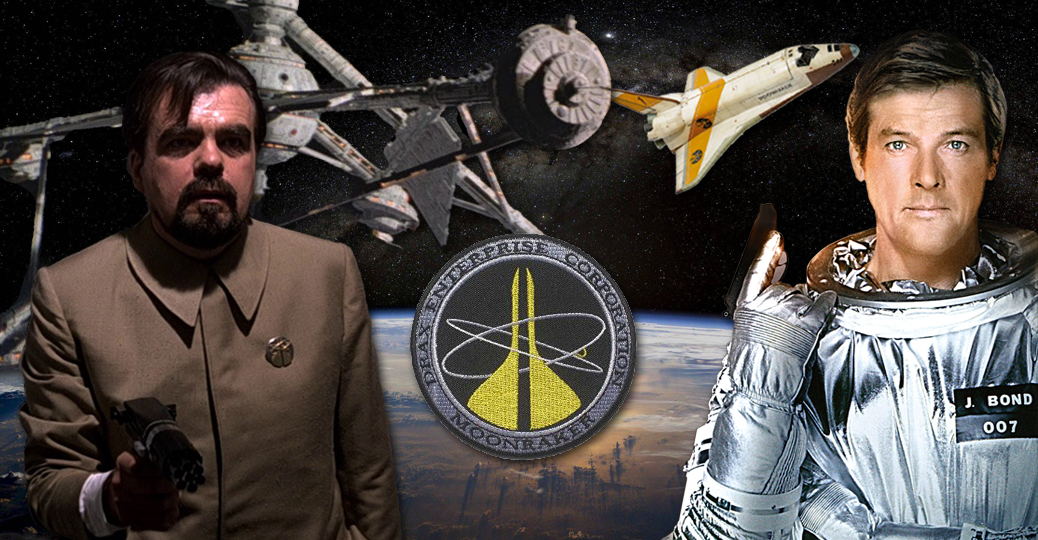
A notable example of the breakaway civilization in film is the 1979 film adaptation of Ian Fleming’s Moonraker. Moonraker the film differs significantly from the Fleming’s novel, but the differences and parallels are important to highlight: the novel focuses on a kind of Operation Paperclip scenario, wherein Sir Hugo Drax is secretly building a V-2 rocket in tandem with the Nazis to destroy England and rebuild the Reich. For many, the film adaptation a few decades later represented an exceedingly outlandish interpolation on a pulp spy novel that failed to achieve much more than mimicking the box office success of science-fiction blockbusters it attempted to copy, cinematic innovations like 2001 and Star Wars.

Continue reading Moonraker & Breakaway Civilization

Operation Scorpion

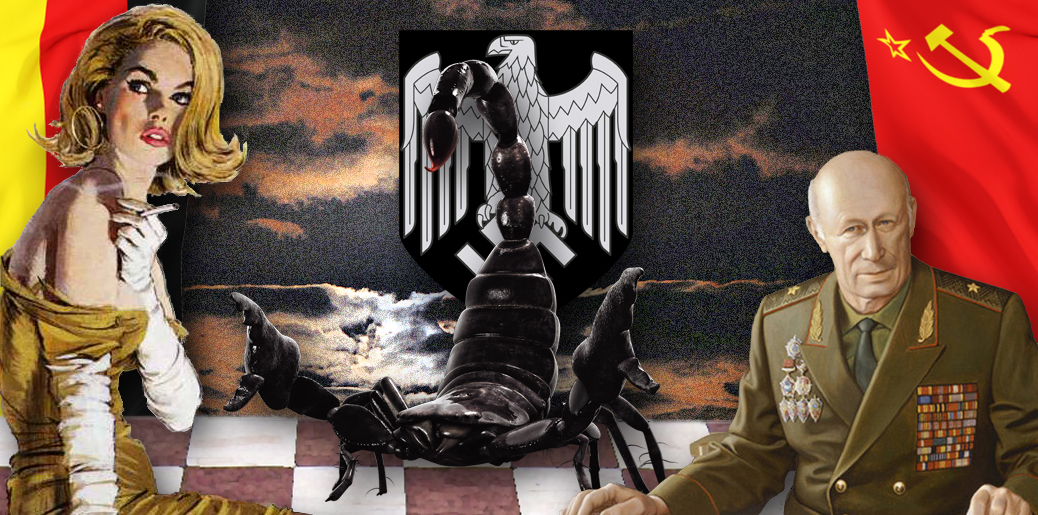
From the memoirs of legendary Soviet intelligence officer Maj. Gen. Yuri Ivanovich Drozdov comes the incredible story of a false-flag recruitment operation by the KGB’s Directorate S (Illegals) against West Germany’s own intelligence service, the Bundesnachrichtendienst (BND) during the height of the Cold War. The following 1995 article from German Focus magazine tells the tale:


Former KGB General Yuri Drozdov admits: “Our valued agent in the German Federal Intelligence Service (BND) has still not been uncovered.” 

Firm handshakes, pats on the shoulder – the old guard in its narrow circle.

The men, in a predominant majority over 70 years old, are dressed strictly according to protocol. On this hot summer day they’re wearing austere coats and shirts with ties. Guests are received by Yuri Drozdov, general of the KGB, the former Soviet secret service, who just a short time later, over a glass of vodka, would allow himself to loosen his tie.

Continue reading Operation Scorpion

The Great Game in Tibet

From the archives of the SVR, Russia’s foreign intelligence service, comes a fascinating story of the early-twentieth-century Great Game between Imperial Russia and the British Empire, as the two sides intrigue and maneuver for geopolitical advantage in the mysterious mountain kingdom of Tibet. 


His Imperial Majesty’s Minister of the Court, Baron Fredericks, was clearly irritated. Only at the last moment was he informed that the program for visits to the Tsar for January 14th, 1904, had to be changed, since the Russian Army’s General Staff requested Nicholas II to immediately receive two Don Cossacks on a secret mission to Tibet for a “confidential audience.” The Tsar agreed, and Baron Fredericks had no other option but to relay to the organizers of the Tsar’s hunt in the Ropsha pheasant preserve that His Majesty could not arrive today and would delay the hunt for several days, about which would be additionally reported.

Continue reading The Great Game in Tibet

Deep-State Actors in Diamonds are Forever

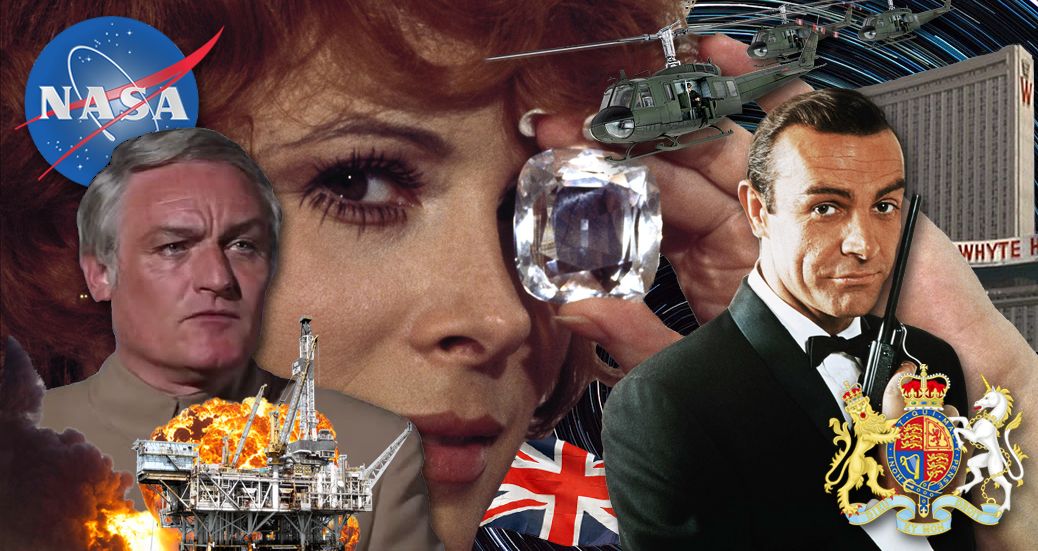
We’ve analyzed 007 in the past, as well as Howard Hughes in light of Scorcese’s The Aviator, but could there be a connection between the two? What if Ian Fleming was encoding an explosive, real-world conspiracy involving Howard Hughes, JFK, Aristotle Onassis and a legendary kidnapping? Not only is there evidence to suggest this, but the film version of his 1954 novel Diamonds Are Forever subtly suggests much more. We know Fleming was a high-level Royal Navy psychological warfare specialist and involved in numerous covert operations, and as I’ve argued many times, Fleming’s novels and the film versions, in their own respective ways, elucidate these clandestine activities, touching on everything from black-market smuggling networks to actual espionage and assassinations.

Continue reading Deep-State Actors in Diamonds are Forever

Hitler’s Plot to Assassinate Stalin

While it is known that German intelligence targeted Soviet leader Josef Stalin during World War II, how close did they come to succeeding? The following tells the story of SS Operation Zeppelin and the brilliant counter-moves, known as Operation Fog, undertaken by Soviet military counterintelligence (SMERSH) officer Grigorii Grigorenko, who would go on to head the KGB Second Chief Directorate during the Cold War. 


Much has been said and written about the attempt to liquidate Stalin during the Second World War—at the same time, nothing specific, but rather things at the level of speculation or fiction.

The failed assassination of the Supreme Commander of the Soviet Union, planned by German saboteurs, is a thrilling subject, after all. And they indeed planned to kill him. However, the story of capturing terrorist saboteurs turned into the prequel to one of the most successful operations by Soviet counter-intelligence, codenamed Fog and carried out by Major Grigorii Fedorovich Grigorenko, a resident of Poltava, today’s Ukraine. Russia’s Federal Security Service (FSB) recently declassified this operation.

Continue reading Hitler’s Plot to Assassinate Stalin

The KGB in Africa

Africa has long been a geopolitical battleground among the great powers, with the Cold War representing an especially intense round of this struggle. From the archives of Russia’s SVR comes an overview of the KGB First Chief Directorate’s intelligence, covert action, and political influence operations in Africa during the 1960s and 1970s.  


In the postwar period, Soviet foreign intelligence had to work on an African continent almost unknown to it up to that time. In the 1950s, Soviet intelligence’s interest in Africa was conditioned mainly by the acquisition of information on the plans and intentions of Western countries. At that time many air and naval bases of NATO member nations were situated in Africa. Their interest in the continent was rooted not only in strategic reasoning: Africa was rich in food and mineral resources, and her depths preserved deposits of materials necessary for modern industry, such as uranium, cobalt, wolfram, copper, nickel, oil, and many others.

Continue reading The KGB in Africa